

 Gina & Ryan Photography
Cabo San Lucas, or more simply, Cabo, might be best known for its upscale tequila-fuelled nightlife and clifftop resorts, and rightly so. Everyone’s best Friend, Jennifer Aniston visits several times a year, and popstar-actor Selena Gomez hosted her hens’ do beachside here. It’s that kind of vibe, but the love affair started long before this. The iconic 1976 song “Hotel California”, written about the Eagles’ time here, celebrates (much) wilder times. Perhaps you know the words?
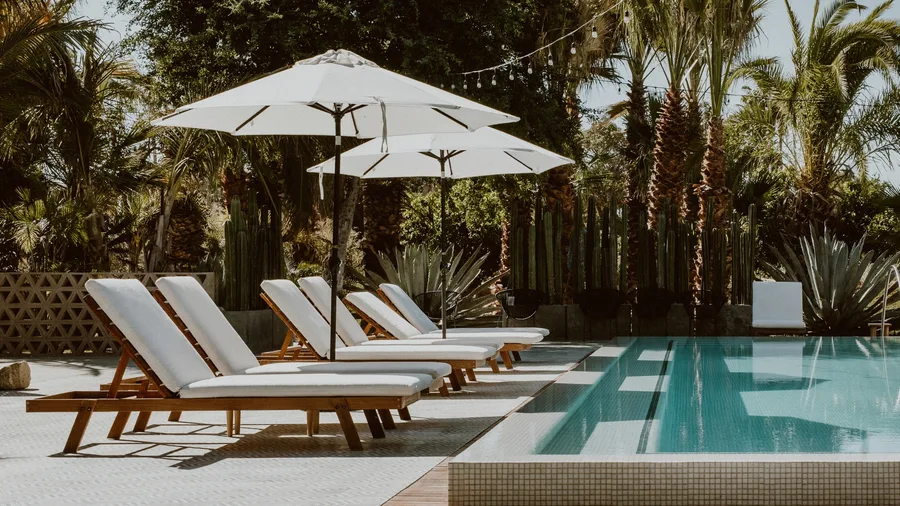
Forget that. Up in the tranquil hillsides of Ánimas Bajas, only 20 minutes from town, there’s a different rhythm entirely. The pace slows. Small things are done with intent. Acre Resort (pronounced Ah-cray) unfolds over 10 hectares of orchard and sweet-sapped agave. Part working farm, part design-driven retreat, and wholly, absolutely, uninterested in the chaos down the hill, it’s like polished boho had a commitment ceremony with nature.
Cabo, in the Mexican state of Baja California Sur, isn’t always an obvious choice from Australia, but it should be. Get to LAX, and from there a direct flight has you arriving in two and a half hours. Once installed at Acre, you’re in good hands. Thirteen treehouses stalk the canopy like something dreamt up by a minimalist Tarzan, each wrapped in bark and softened by the light that slips through the leaves. Inside, it’s texture and quiet luxury, binoculars for bird watching and air conditioning for sleeping deeply amid the scent of citrus and a soundtrack provided by cicadas. There’s WiFi if you must, but this place is designed to make you forget about life oustide the perimeter.
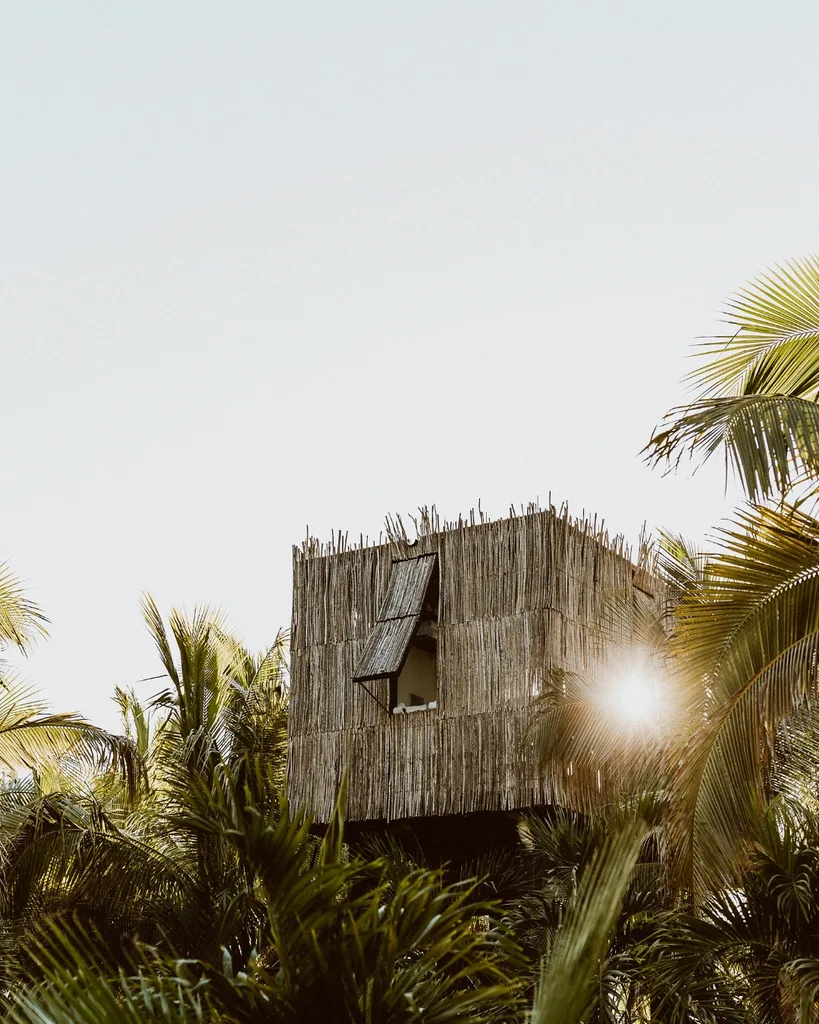
Beyond the treehouses, a handful of private villas sit discretely among mango and papaya groves, each with a pool and outdoor shower that feels equal part indulgence and deserved invitation. Mornings start with sunlight slanting through branches and coffee taken on the deck, as you listen to the world come alive around you. The effect is quietly cinematic, a heady mix of jungle, design and calm that feels lived-in rather than staged.
Acre’s spa leans into this feeling, too. It’s not a simple white-dressing-gown-and-whale-noises affair; these are outdoor treatment rooms woven through the foliage. Intentionally immersive, guests choose to receive their treatments in a treehouse spa or in a private jungle setting. My pick is the Acre Nopal Detox, with a full-body exfoliation using a dried cactus-fibre paddle, then a moisturising wrap in organic Nopal (a local succulent), and finally a firm massage to detoxify all that ails you. Treatments use farm-grown herbs and local oils, and you’ll want to go more than once.
Guests who prefer a slightly less passive form of restorative care can join sunrise yoga on the raised wooden deck embedded into the bush. Bring your green juice and settle in for something simple and steady. The movement is nothing performative; more like a favour you feel you’ve done for yourself.
Then there’s the food. Executive chef David Fajardo has led the kitchen for three years. Originally from Mexico City, he arrived after an 18-year relationship ended. “I was sulking,” he says with a laugh. “Then a recruiter called; talk about timing.” Would he be interested in moving to paradise? He would.
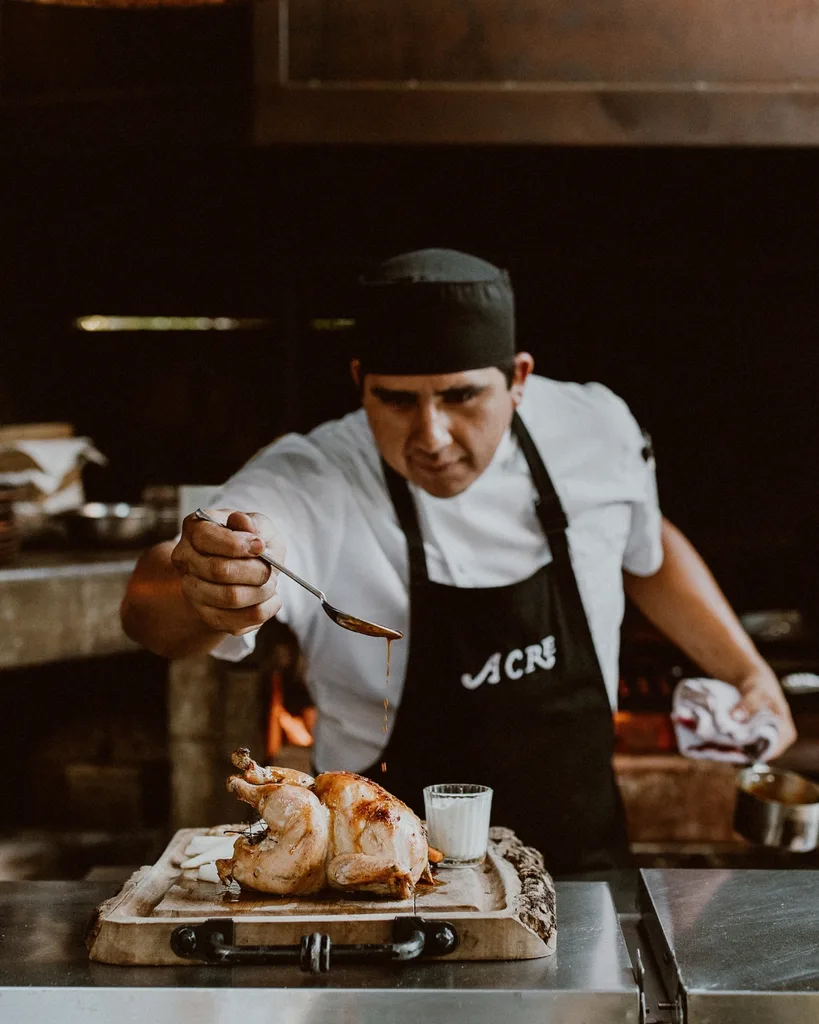
Acre became a reset. “I wanted to set a mood with my cooking, to do our own thing instead of chasing.” That “thing” – a blend of environmental care, local produce and culinary innovation – earned Acre one of Mexico’s first Michelin Green Stars; a category introduced in 2020 to recognise restaurants that combine culinary excellence with exceptional environmental and social responsibility. “The star raised our profile, but we’ve been doing this since I got here,” says Fajardo, who’s quick to clarify the award. “Sometimes people mistake it for a red star – the fine-dining thing – and we aren’t that.”
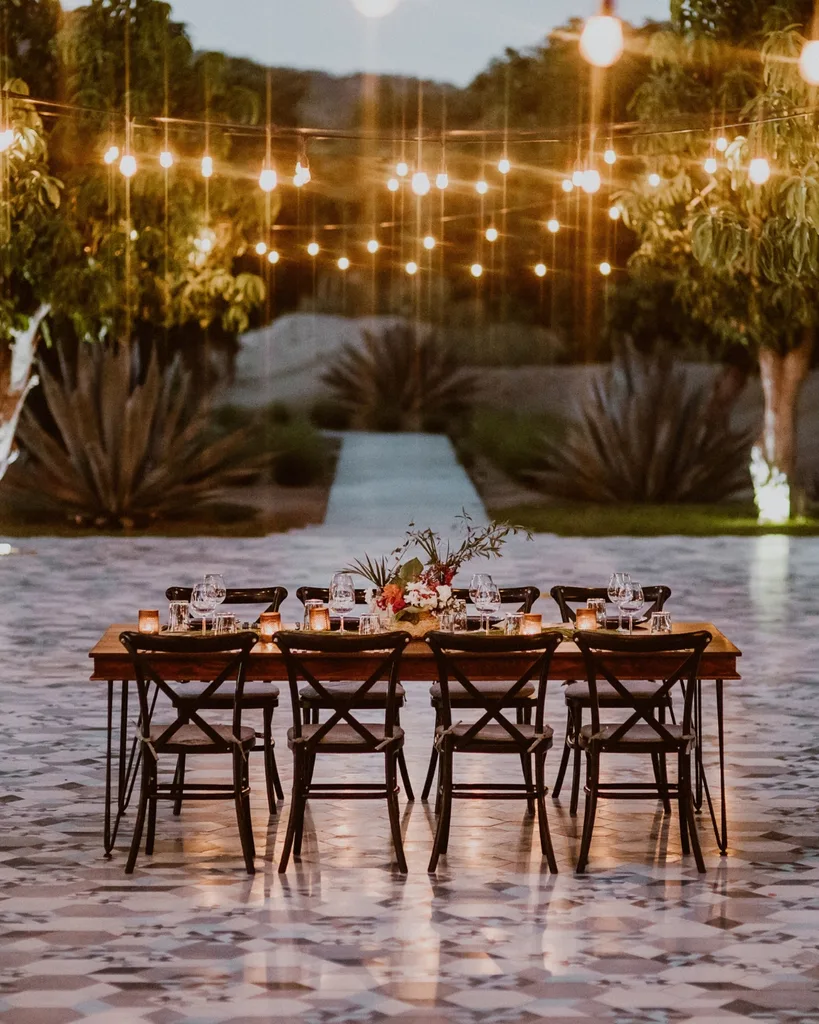
Lunch and dinner are served beneath a palm-thatched roof open to the air. Fans turn lazily but competently while little chimineas filled with smoking rosemary, lavender and spent limes keep the mozzies away. Cooled by shade and oscillating mist, I ask Sandra, my server, for a bar recommendation.” Anything spicy is popular,” she says, sliding a glass my way. The drink is made with chilli bitters, spiced salt, jalapeño scrub, tomato water, green tea, clarified lime and a pickled ruby beet coin. It tastes like the garden: sunburnt, vegetal, layered. A measured contradiction of heat and restraint. There’s another with mango, a special containing mezcal and burnt brown butter – smoky and far too easy to finish. “We’re overflowing with mangos right now,” says Fajardo, gesturing out towards the trees. “We’re making tonnes of things with them, sharing them around and feeding the rest to the goats. They’re happy.” I imagine them, with saffron-coloured teeth, pulp dripping from their juicy beards, looking entirely pleased with the arrangement.
The menu shifts with the farm’s bounty. “We do food of the world, rooted in Mexican ingredients,” he explains. “Not Mexican food.” I start with a cheddar biscuit, which seems an odd inclusion, but it’s a bestseller. One bite in, I get it. Buttery and crisp-edged, it’s sharp with cheese and moringa leaf. A beet salad – earthy, sweet and finished with a faint hint of smoke – represents Acre’s style best. “Cooking with wood and fire, that feeling is what I love,” says Fajardo. Oysters, heirloom tomato caprese, a whole fish, they pick up a salty tanginess that speaks of Baja. Sometimes embers finish them off, because at Acre, even ashes do their part.
Behind the kitchen, is the farm, Fajardo’s personal Narnia, which produces much of what’s on the menu. Rows of herbs and chillis fill the air with green spice, alongside test plots of finger and zebra-skin limes, stands of Buddha’s hand citrus. “One of the gardeners is growing something we can’t even identify yet,” he says, clearly delighted. “We’ll see what happens.”
When they can’t grow what they need, they use local suppliers, and when local suppliers can’t provide, the team adapts. “There are people doing great things in small batches, but I can’t ask a purveyor for eight hundred kilos of tomatoes. They can’t do that, so we think harder.” Maybe it’s green papaya instead of tomato, or fermented chilli where acid once did the work. Acre’s circular system – composting scraps, reusing greywater, minimising packaging and creating recipes based on what’s best – has brought them close to zero-waste. “We aren’t there yet, but we aren’t far off.” For Fajardo, sustainability starts with people. “The real secret of this place is the team. Everyone contributes ideas, everyone is empowered in the garden, in the kitchen … it’s not my project, it’s our project.”
The philosophy extends beyond the property line. Acre’s on-site animal rescue rehabilitates and rescues street dogs. More than a thousand have been adopted since its launch in 2019, many by guests. The program partners with local vets and shelters in Los Cabos, creating work for handlers and carers while helping reduce the stray population.
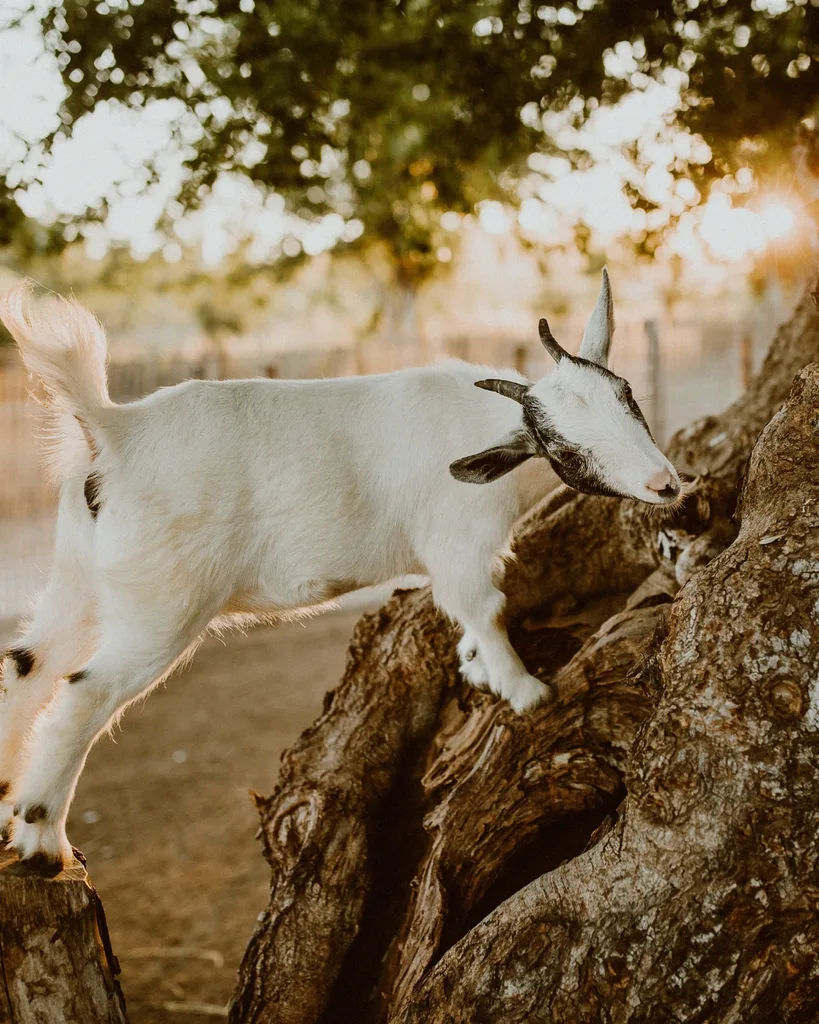
The resort also has its own stable of happy rescued horses, too. Picture a slow ride at golden hour, hooves thudding through dust while the hills blush pink. It’s a whole mood. “It’s part of who we are,” Chef tells me. “Caring for animals, for people, for what we grow and who we feed, it’s all connected.”
That spirit of connection shows up in guests’ experiences. Visitors can join garden walks with the horticulture team, who take pride in their product like an artist does their finest work, which is an apt metaphor. There are low-key cooking classes where you learn to make tortillas the way the kitchen does, mezcal tastings, and small-format art sessions.
The coast isn’t far, if you can bring yourself to leave the property. Staff can arrange transfers to nearby swimmable beaches or link guests with trusted operators for surfing lessons or stand-up paddleboarding. Those beaches are stunning though varied; a mix of postcard-perfect calm and look-but-don’t-swim drama. Along the Pacific side, the waves hit hard with a strong undertow and steep drop offs, which is why these stretches stay free of cafés and clutter. They’re ideal for a lazy or an impromptu photo shoot. The Sea of Cortez side is a different story entirely: Medano Beach is lively with beach bars, lounges, vendors and all the conveniences you could want. Chileno and Santa Maria are gentler bays with clear water and snorkel rentals. Palmilla feels polished and peaceful with just enough services to make a day of it.
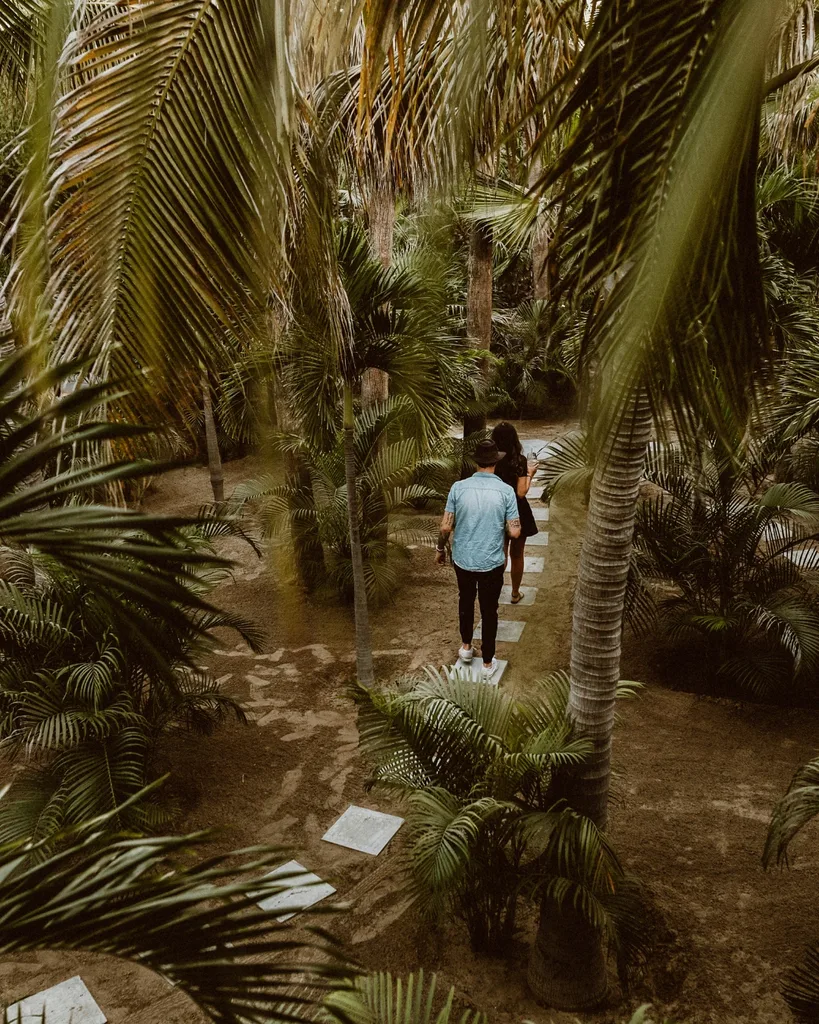
In the end, perhaps it’s this storm of synergy that makes Acre more than just a resort. It’s a self-contained ecosystem: a place where waste becomes compost, where gardeners experiment freely and where a chef recovering from heartbreak found purpose again. “You can hear yourself think here,” says Fajardo. “You see the result of what you do. There’s meaning.”
Walking back through the canopy, mangos on the ground like big orange eggs, it strikes me that Acre succeeds not because it tries to be everything, but because it trusts in the things it already is – calm, simple, human. For a place built on abundance, restraint might be its most compelling luxury.

Related stories
Native ad body.
Native ad body.
On the Road: Touring the best of Tasmania
Native ad body.