
 Julius Hirtzberger
Venice, this late October morning, is a mist-cloaked maze. The ancient city is a living memory of bacchanalian ages past; of exploration and water-borne commerce; the concentration of religion and politics, desire and creativity. Venice is also a pressing, vital reality; a fragile treasure to be saved, yes, but also a visionary city: avant-garde, artistic and bold. It can easily bewilder the seasoned traveller; even Google Maps recalibrates constantly, tail-spun by endless passageways that seem to never begin nor end.
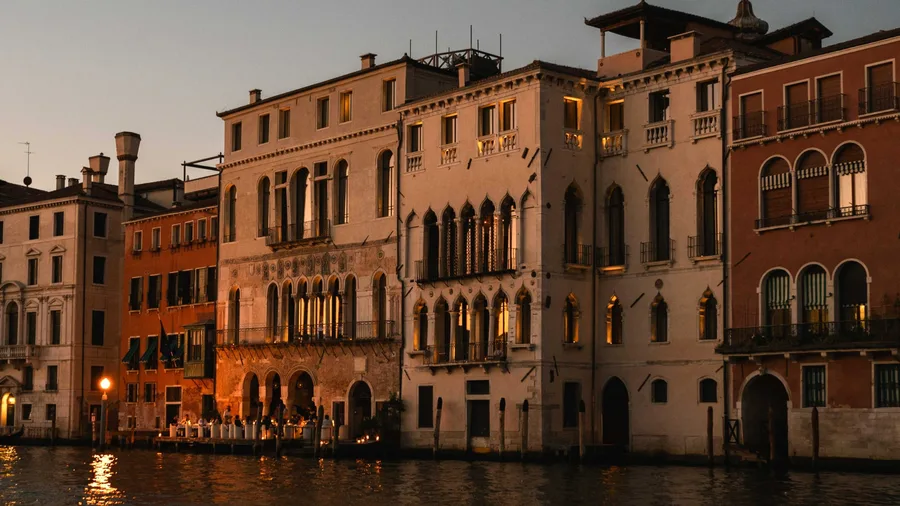
It’s hardly surprising then, that I awake in my suite at The Venice Venice Hotel in a bit of a fog. Opening the curtains, I’m treated to a slow unveiling of the Grand Canal’s morning rituals. To my left lies the Rialto Bridge; to my right, a procession of gondolas and vaporettos approaches through the haze as though emerging from a dream. Some vessels, laden with produce, stop at the Rialto market opposite, so close I can see a lady walking her dog, which promptly lifts a hind leg against a market table. Everyday life in La Serenissima: minutiae amid the majesty.
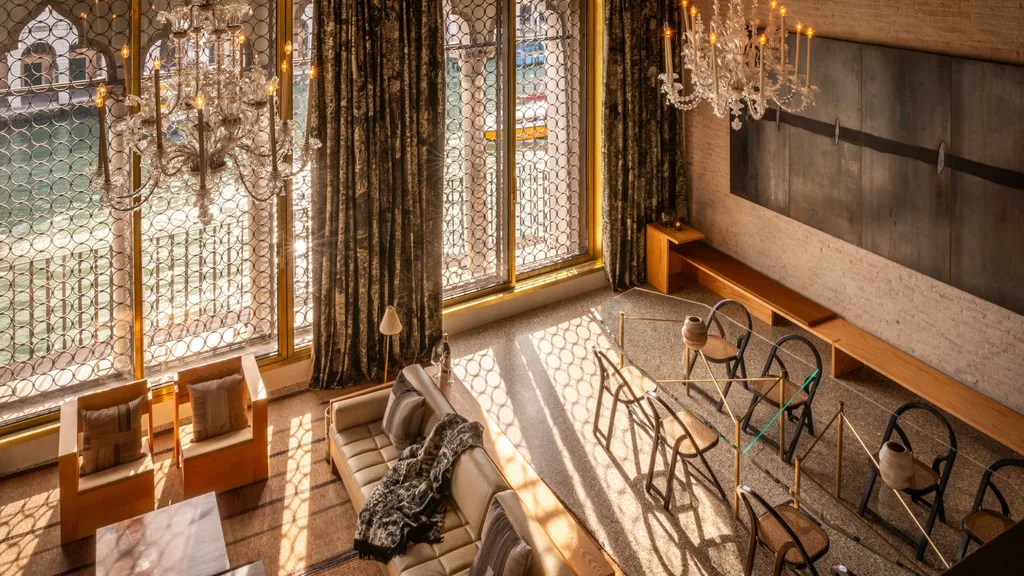
It’s a remarkable way to start a day here, framed beautifully by The Venice Venice. Opened in 2022, the project sprang from the creative vision of founders Alessandro and Francesca Gallo – husband-and-wife creators of the Golden Goose sneaker brand – who tackled the tightrope-walk of sensitively restoring one of the oldest palazzos on the Grand Canal, dilapidated and deserted for decades, from the water-soaked foundations up.
Previously known as Ca’ da Mosto, the 13th-century Byzantine palace hosted aristocrats and adventurers, and later, artists, philosophers and poets including Turner, Voltaire and Shelley. The ground floor sotoportego – a passageway from canal to courtyard formerly ferrying goods – now houses Venice M’Art, a modern, curated retail and dining space. A photographic homage to the hotel’s restaurant suppliers – the lagoon-locals bearing scampi held aloft like earrings, and enormous frilled lettuces like bouquets – overlooks guests tucking into sugar-dusted, citrus-scented Venetian fritters, spinach and burrata frittatas, and heaving pastry baskets with a side of silken pistachio cream, in the diffused morning light.
The hotel’s 43 rooms pay further homage to various movements, featuring works by artists from Christo to Yoko Ono. Functional romanticism is the name of the game; beauty and purpose entwined, materials carefully selected for a soul-settling calm. In perhaps the neatest encapsulation of the hotel’s vision, the first-floor piano nobile houses the Venice Bitter Club, with its restored coffered ceiling, walls clad in a bespoke tapestry by artist Francesco Simeti, and a central bar that “looks like a spaceship from the future”, in the words of general manager Simone Cherin. The place is abuzz during Biennale and the Film Festival, he says, with gala dinners in the grand second-floor salon and parties aplenty.
The hotel is a poetic portal for anyone curious to discover a fresh take on a city so ubiquitous in the traveller’s consciousness. “For us, this is more Venetian than other styles,” says Cherin, “because Venice at the beginning was an avant-garde city.” At some point, he explains, the local style was crystallised in a baroque freeze-frame: heavy brocades, everything gilded, unrelenting opulence. So they decided to create “a new style called post-Venetian … to emphasise the past and looking, at the same time, [at] the shape of Venice to come”.
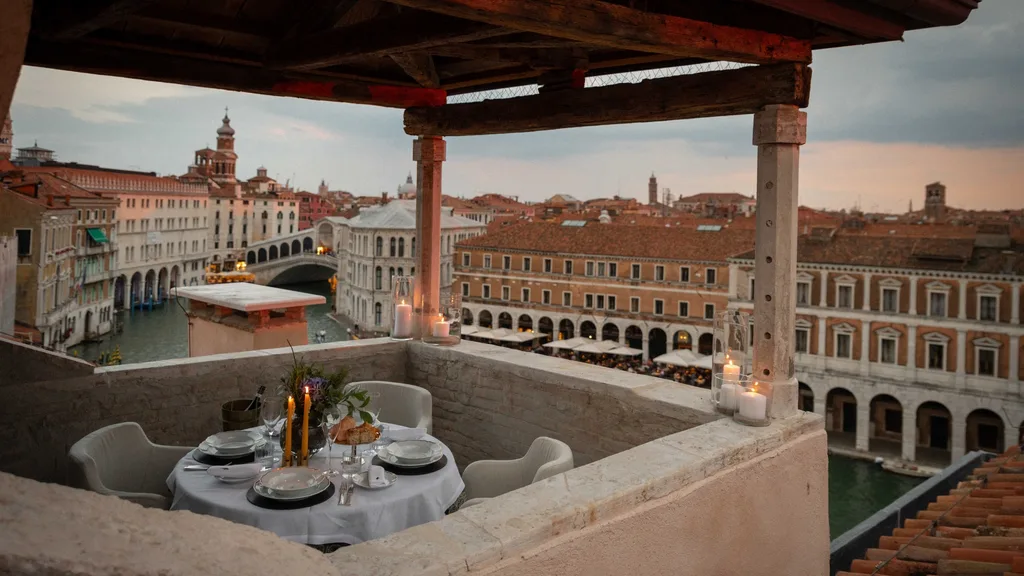
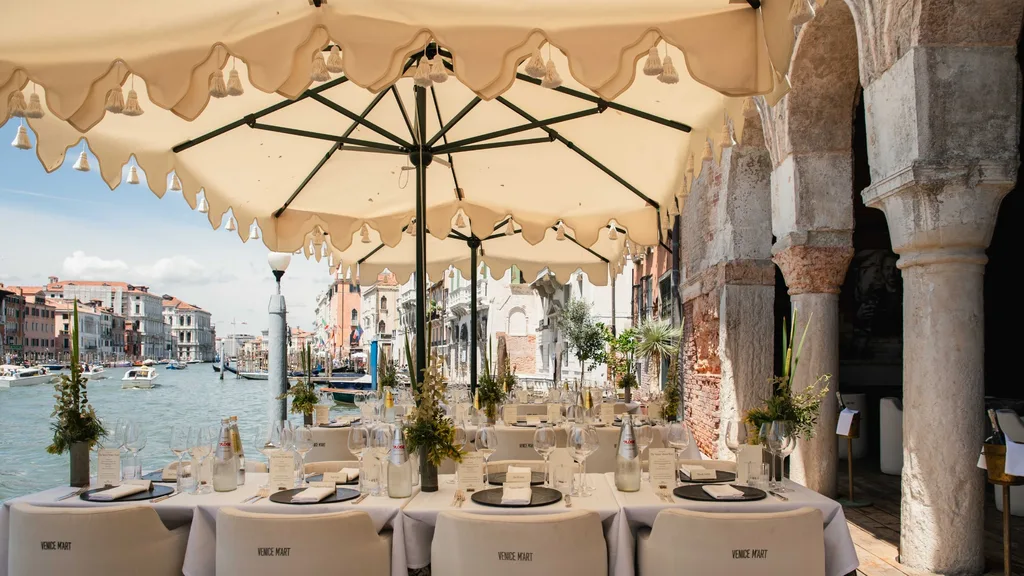
We sit at Venice M’Art’s glorious canal-side terrace, sipping foamy Aperol Spritzes and snacking on Venetian fritters filled with whipped cod, ham and artichoke, or porchetta and mustard. By night, the space morphs into Francy’s, an atmospheric, candlelit scene by the light-mirroring waters, where a knockout duck ragù crowns golden pillows of gnocchi.
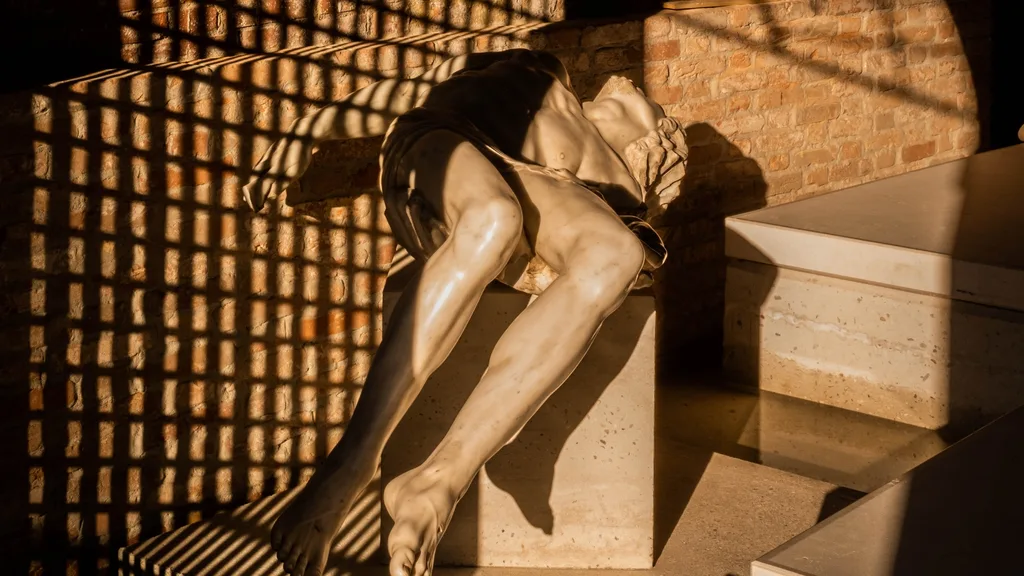
Come morning, we admire the hotel’s dreamlike water-level entryway – its seemingly floating platforms conceived as a tribute to revered Venetian architect Carlo Scarpa – before heading for St Mark’s Square. Caffè Florian is packed, white-jacketed waiters weaving through jewel-box rooms. But across the busy square, we step into the Olivetti Showroom, where Scarpa was tasked by the iconic typewriter company with showcasing their wares. Defined by light and water, concrete walkways and intricate wooden detailing, it’s a lovely pause of a place, counterpoint to the frantic grandeur outside.
Venice in late October is busy, but nothing like when I was last here, just a few months ago in hot, heady August. Then, the city had appeared through the shimmering lagoon-spray of our water-taxi as we passed a peeling parade of buildings in shades of bleached-out terracotta and burnt buttercup, with fading emerald shutters. As we’d slipped through the northernmost outer canals of Cannaregio, Venice flooded my veins like a fever dream.
I’d left the oasis-like walled garden of the bijou, beyond-the-crowds NH Collection Venezia Grand Hotel Palazzo dei Dogi and walked towards the pulsing historic centre; yielded to the cool whispers of narrow passageways, and to ogle Venetian velvet slippers, elegant leather gloves and tiny glass trinkets. Later came dinner at Ristorante da Raffaele, a canal-side gem where we ordered tagliatelle with lashings of truffle, creamy baccala, and tiny tomatoes bursting with summer.
In October, the intensity has reduced enough for my friend and I to nab a table at Da Ivo (beloved by visiting celebrities) without a booking, following some serious discussion between two handsome, gravitas-wielding waiters. We find ourselves in conversation with a major Hollywood producer and his wife. “We’ve been coming here for 30 years,” she says, reliving his iconic comedic scenes with Chianti-fuelled enthusiasm. It’s almost enough to distract from our sea-sweet, seasonal moeche fritte; the crabs lined up like tiny tango dancers, legs entangled in lightly crisp batter.
We buy last-minute tickets for an evening concert at San Vidal church, crossing an almost deserted Campo Santo Stefano to sit in creaky chairs as the musicians coax Vivaldi from their instruments, hypnotic as honey bees.
On our final day, we revisit Vino Vero, a lively little wine bar in Cannaregio that I stumbled upon in summer. It may be a little out of the main crush but, like in August, there’s a constant flow of customers. This time however, we manage to score a coveted canal-side table after the bartender guides us to glasses of Ti Voglio Bene, hinting at salt and summers past. Back amid the plastic poncho-wearing masses in rainy St Mark’s Square, we’re seeking respite by the lagoon’s edge, when a dolphin shoots skyward, spinning, out of the water, before disappearing. We turn to each other, open-mouthed: another piece of natural minutiae, amid all the majesty.
The quietest I see Venice is on my third visit in early December. After a late-night check-in at Violino d’Oro – an atmospheric gem of a hotel more akin to an impossibly stylish home, just five minutes’ walk from St Mark’s Square – I step out into the silent streets where I’m rewarded with the surreal sight of the usually sardine-packed piazza: completely empty, save a few nuzzling couples. Along one length hangs an ethereal installation, Murano Illumina il Mondo (Murano Lights Up The World); that famed Venetian glass shaped into visions of prismatic colour and captured light. For this hushed half-hour in the middle of the night, Venice feels all mine.
Opinions on when to visit are as multifaceted as the city itself. Leaving on the Belmond Venice Simplon-Orient-Express in October, our room attendant says she loves early May, with fewer crowds than summer and the blooming wisteria of the private gardens. Cherin speaks of the “vibrant” weeks when the Biennale and Film Festival roll into town, maintaining it’s always possible to find a quieter respite away from the main maelstrom, though you’ve got to be willing to wander. When I ask a store owner what it’s like during Carnivale, she rolls her eyes dramatically: “No. No, no, no.” And Sara Maestrelli, creative director of Collezione Em (Violino d’Oro), loves January, “when the fog thickens and the city becomes even more uncanny and spectacular than at any other moment of the year… there’s a natural, almost primal quality to it”. Certain restaurants, hotels and shops close at this time, she warns, “so it’s not necessarily a Venice for first-timers, but it is absolutely a Venice for lovers.”
Both Maestrelli and Cherin suggest venturing out into the lagoon to explore the islands. “It’s the quickest way to remember that Venice isn’t just a city, it’s an entire world of water, light, and silence waiting beyond the shore,” says Maestrelli.
I say go whenever you can: with vigour, verve and an openness to wonder. When is the best time to visit? Whenever you can.

Related stories
Native ad body.
Native ad body.
Native ad body.