
 James Moffatt
Brisbane chef Louis Tikaram knows his way around a Peking duck. “It’s one of those dishes that when done right is probably the most perfect dish I have ever eaten,” says Tikaram.
The name given to one of Beijing’s most famed dishes has also become the name for the breed of duck used in the classic, and the dish’s hallmarks from its deep amber skin to its rendered fat are appreciated globally. At Tikaram’s modern Cantonese fine-diner Stanley, it’s been a staple of the menu since opening.
“We designed the kitchen around this one dish with a whole room designed specifically for the cooking of ducks, custom stainless steel hanging racks and a cool room,” says Tikaram. Alongside dishing out ducks at his own restaurant, Tikaram also cites Mr Wong in Sydney, Imperial Treasure in Singapore, Lung King Heen in Hong Kong and Billy’s Pine and Bamboo in Brisbane as excellent spots to experience the dish.
For those wanting to try it at home, patience is required, with the recipe taking four days, making it an ideal long weekend dish. “When you trust the process, the result is so special and an absolute showstopper.”
Ingredients
Method
Rinse duck inside and out with cold running water and pat dry with paper towel, then set aside.
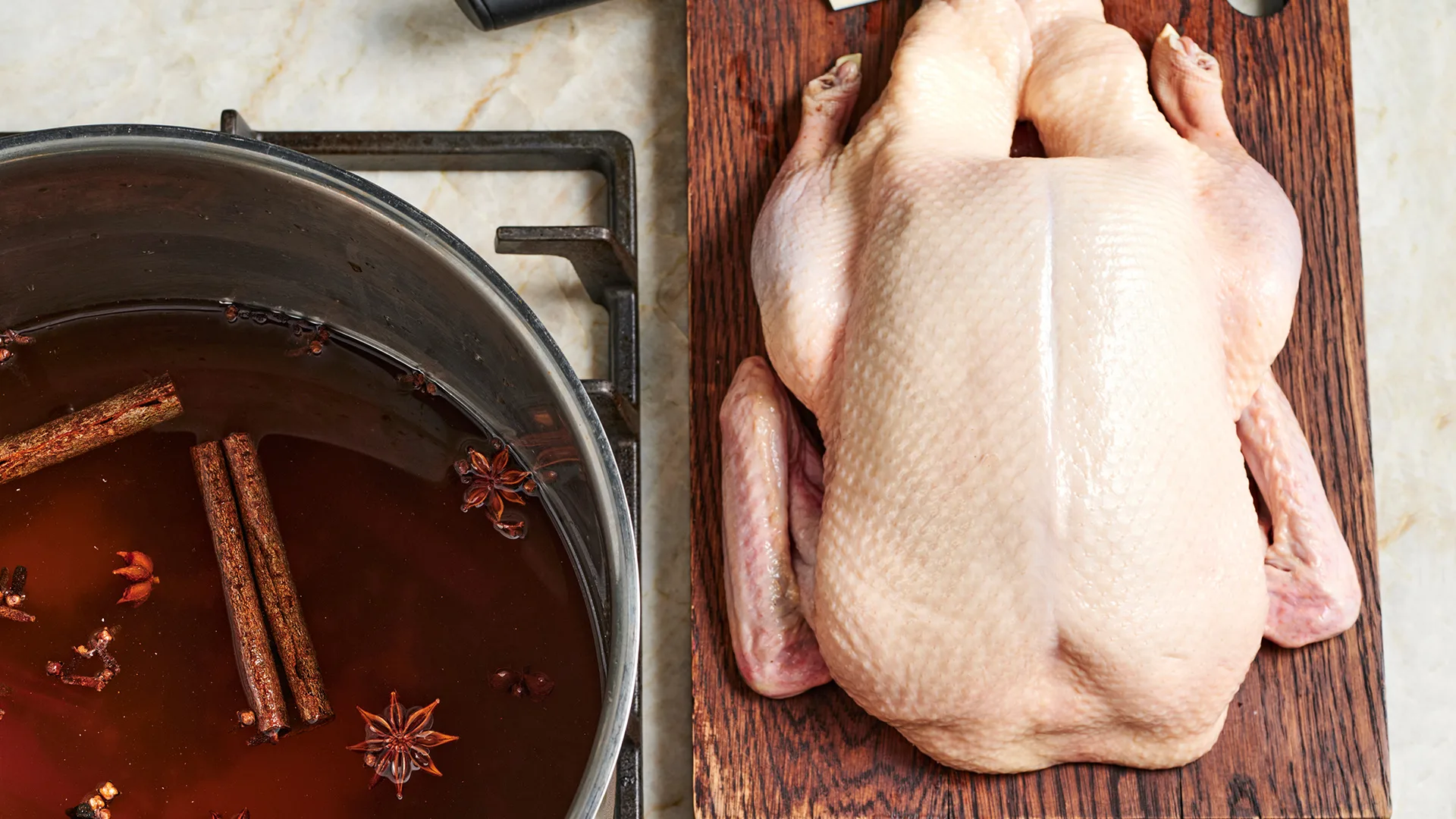
For brine, dry-roast spices in a very large saucepan over medium heat until fragrant (1 minutes). Add salt, sugar, green part of spring onions and 1 litre water and bring to the boil. Remove from heat. Add 4 litres cold water, stir to combine and set aside to cool. Once cool, submerge duck in brine, cover and refrigerate overnight to brine (12 hours).
For glaze, stir all ingredients in a saucepan over low heat until dissolved. Remove from heat; pour into a large deep roasting pan and cool to room temperature, then refrigerate to chill (2 hours).
Bring a wok or very large saucepan of water to the boil. Drain duck from brine, pat dry with paper towel. Carefully lower duck into boiling water to blanch (10 seconds), then immediately place into glaze, massaging and rubbing into skin, especially the breast, to coat. Stretch duck to remove any creases or wrinkles on the skin’s surface that have formed. Place the duck, breast-side up, on
a large rack set over a large oven tray and refrigerate to dry out (2-3 days).
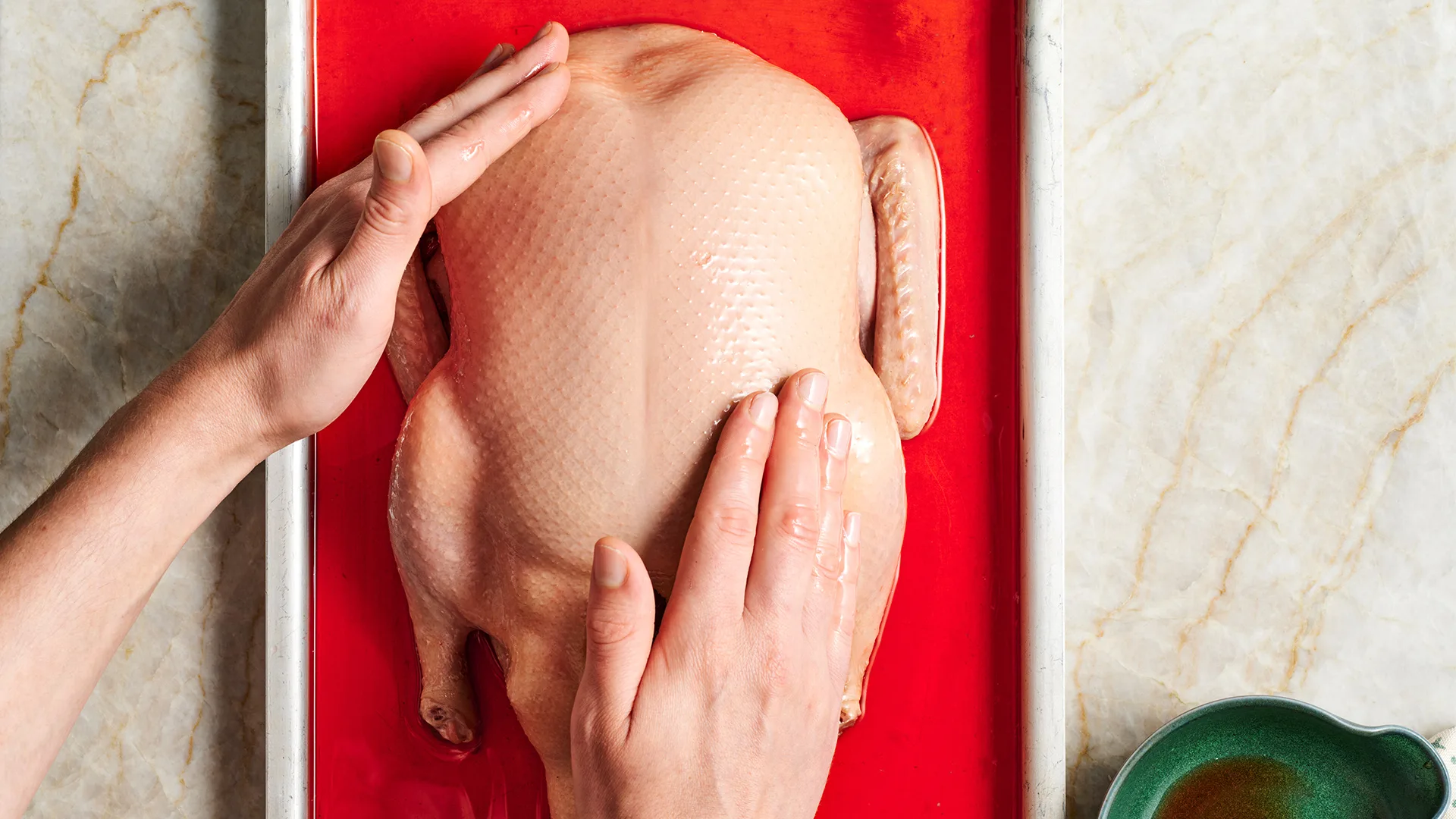
To roast duck, remove duck from refrigerator and bring to room temperature (2 hours).
Preheat oven to 200°C fan-forced. Place duck on a clean rack set over an oven tray. Roast duck, rotating oven tray occasionally, until crisp and deep golden. Juices should run clear when thigh is pierced with skewer (50 minutes-1 hour; if legs and wings start to burn, cover with foil). Set duck aside to rest (20 minutes).
Using kitchen scissors, cut through the breastbone of duck, then remove the backbone to give you two halves. Using a sharp knife or cleaver, cut the breast from the rib cage and thickly slice on an angle. For legs, cut up the leg bone, around the knuckle and thigh bone, twisting, if necessary, to release the meat from the joints in one large piece. Trim to a rectangle and thickly slice. Repeat with remaining duck half.
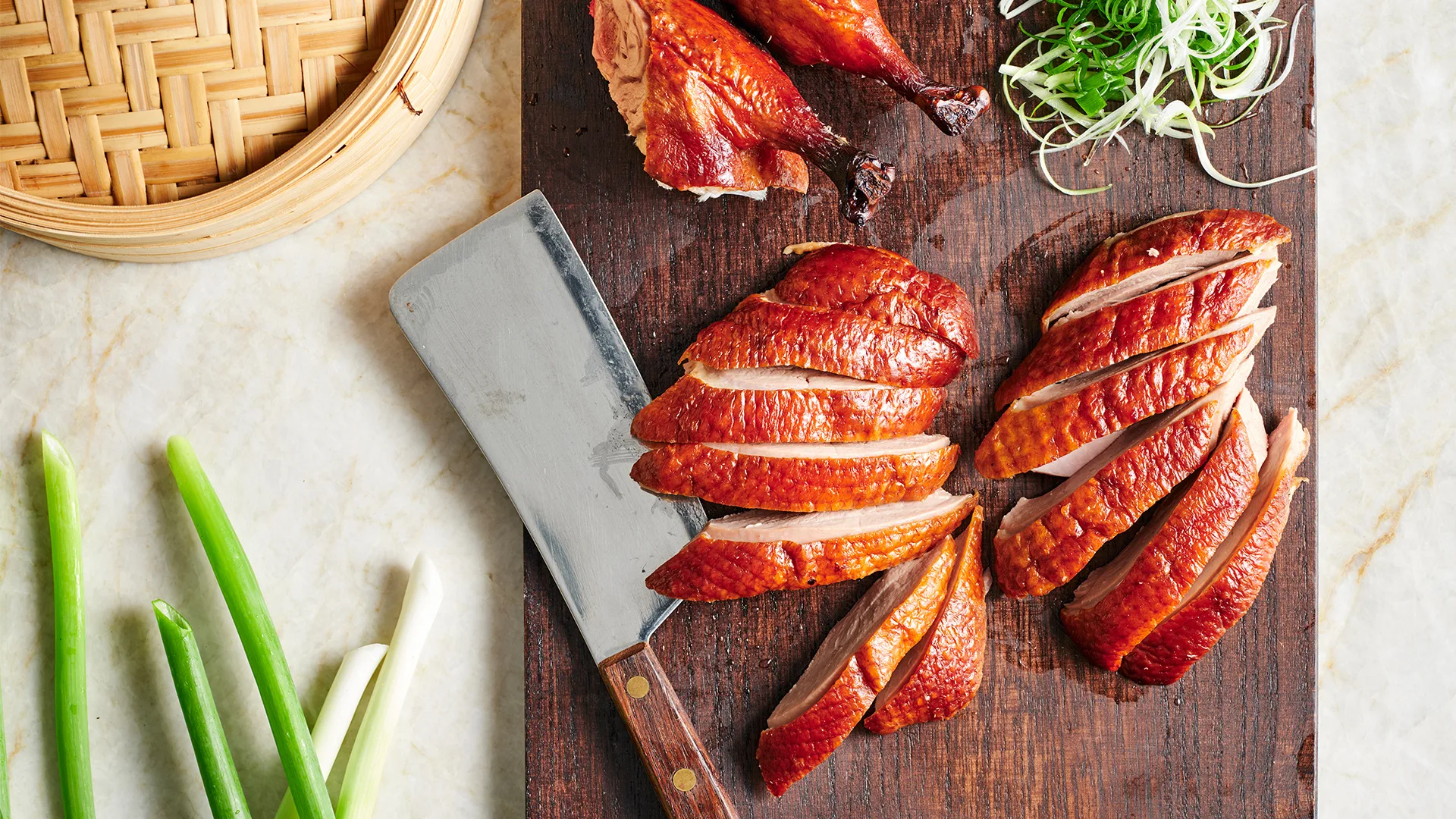
While duck is resting, steam pancake wrappers in a steamer basket set over a saucepan of simmering water until warmed through (3-4 minutes). Remove from heat and set aside, covered, until ready to serve.
Slice white parts of spring onion into julienne. Arrange duck, hoisin, pancakes, cucumber and spring onion on a serving platter to serve.
This recipe also calls for brining, drying (see method).
Start this recipe 4 days in advance.
Hoisin, wrappers, red vinegar and liquid maltose are available from Asian supermarkets. To heat liquid maltose, warm in microwave until malleable.
Louis Tikaram recommends Lee Kum Kee hoisin sauce and Happy Belly Peking duck wrappers. You can also make your own hoisin from scratch.
Note

Related stories
Native ad body.
Native ad body.
Native ad body.