

 James Moffatt
Italian food is so often beholden to tradition, but here in Australia, Italian chefs get a chance to step outside its strict culinary conventions. “Mondeghini is a traditional Lombardian meatball from the region in Italy where I grew up,” says chef Alessandro Pavoni.
Off the back of opening Cibaria – a multifaceted beachside trattoria on Sydney’s Manly beachfront esplanade – Pavoni’s take on the snack sees a lighter and more coastal iteration.
“Here, we’ve created them with sensational Australian crab to honour our new seaside location at Manly Beach.” Pavoni opts to serve them at aperitivo hour, perhaps with a Martini and some plump green olives.
“They’re great for entertaining because you can prepare them in advance and fry them up when your friends arrive and they can eat them with their hands,” says Pavoni.
Ingredients
Method
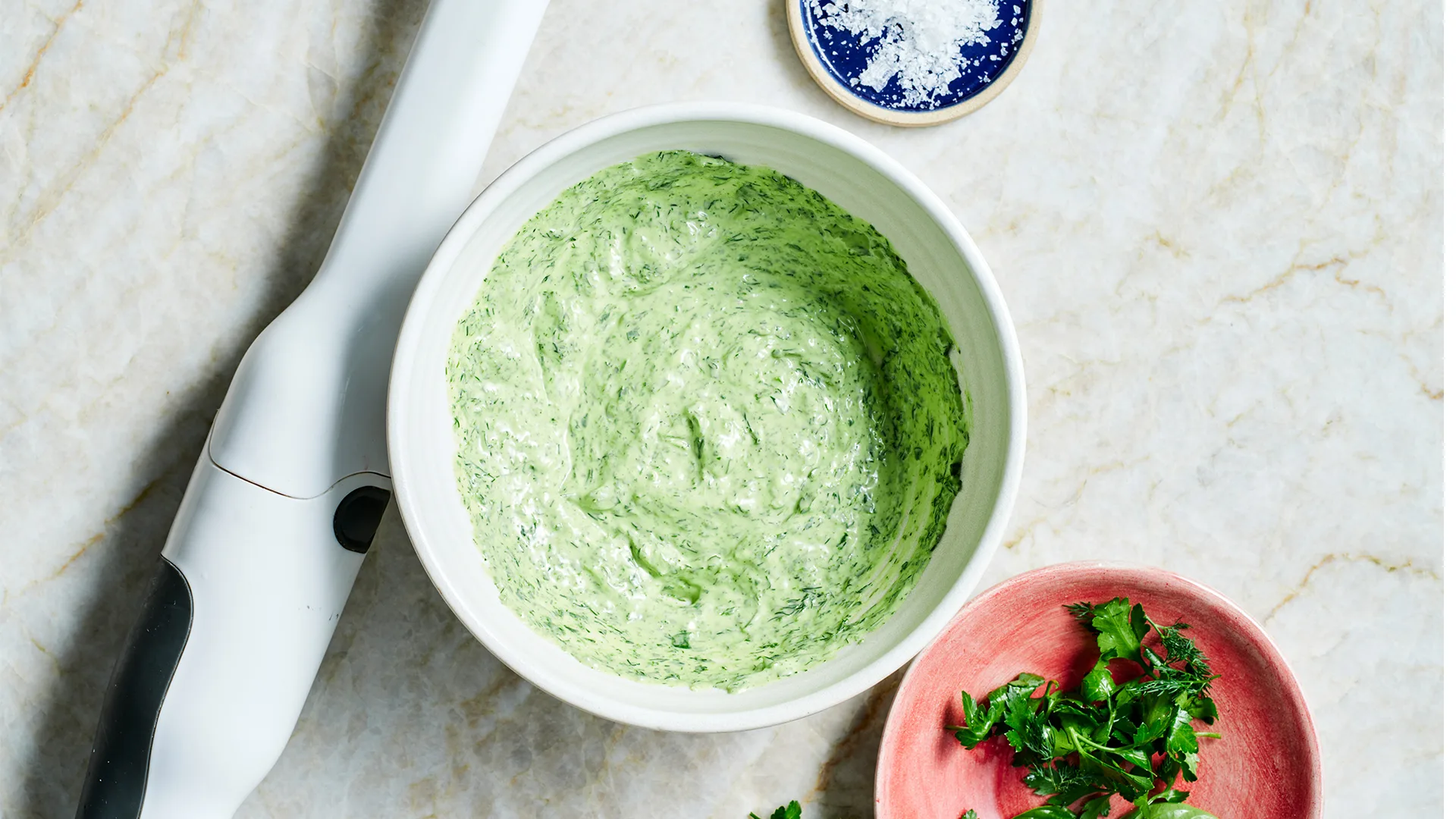
For herb mayonnaise, combine all ingredients in a deep bowl or jug; using a hand-held blender, blend until smooth and season to taste.
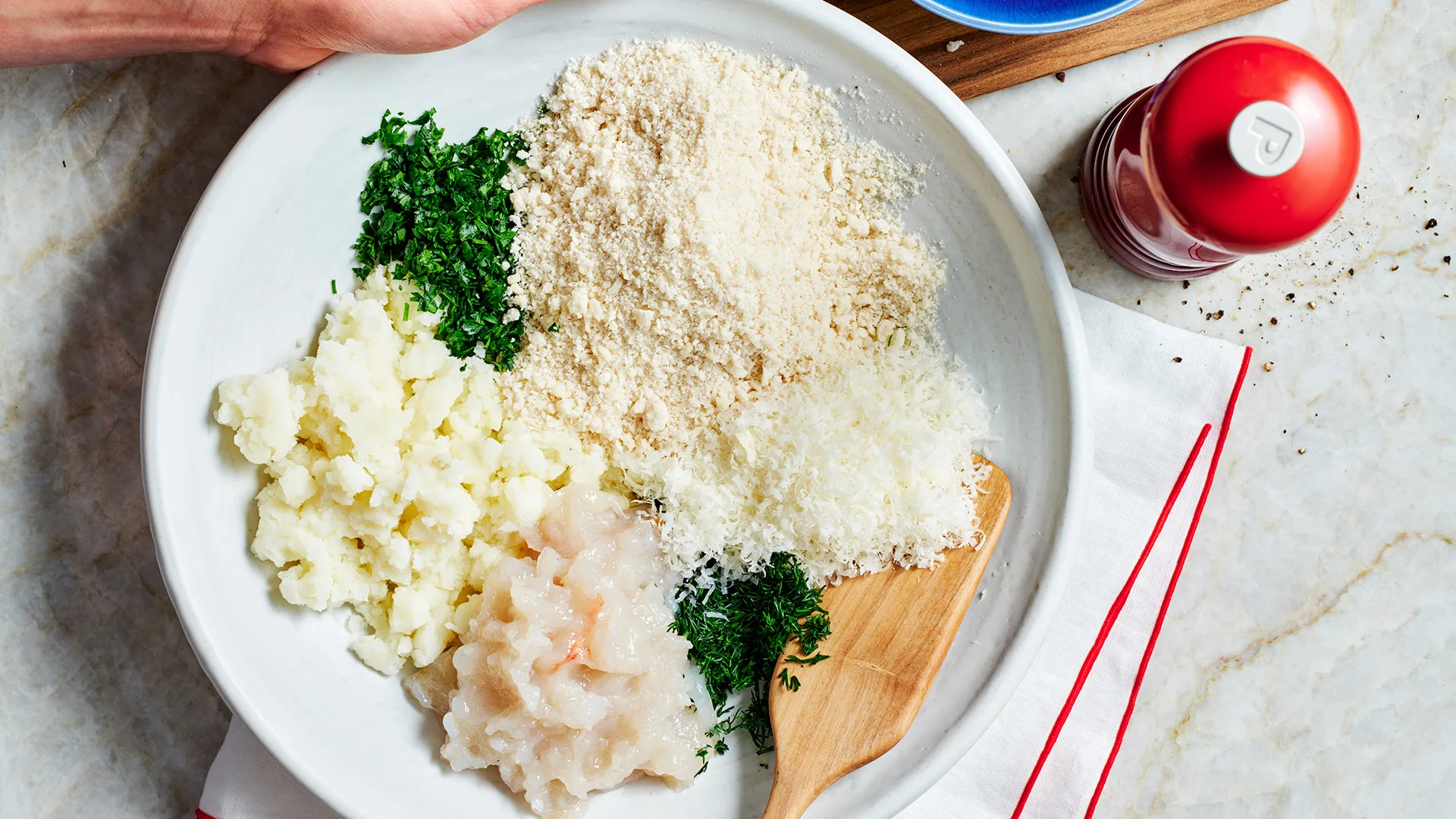
For filling, place potato in a small saucepan, cover with cold salted water and bring to the boil. Simmer until potato is tender (12-14 minutes). Drain; cover with a clean tea towel to steam dry (2 minutes). Transfer to a bowl and mash with a fork. Cover and set aside to cool completely (20 minutes). Stir though remaining ingredients and ¾ tsp sea salt flakes to combine.
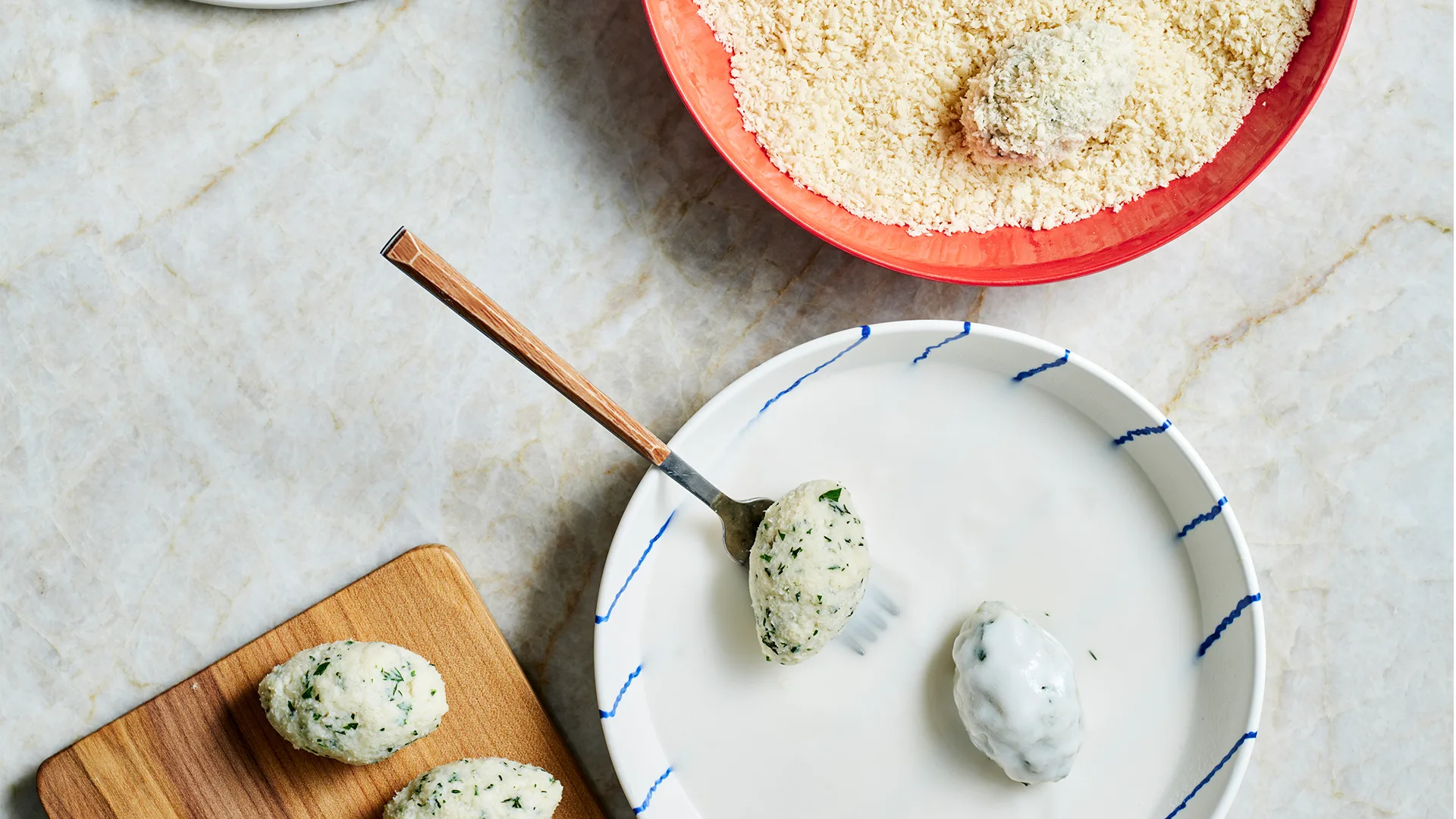
Divide filling into 40gm portions and shape into mondeghini. Place on a baking tray lined with baking paper. Place panko and rice flour in separate shallow bowls. Gradually whisk in 110ml water into bowl with rice flour until mixture is smooth. Dip mondeghini in rice flour slurry, then press into crumbs, coating evenly. Return to lined baking tray until ready to fry.
Half-fill a large saucepan with oil. Place over medium heat until oil reaches 170°C on a deep-frying thermometer. Deep-fry mondeghini, in batches, turning occasionally, until golden (4-5minutes; be careful as hot oil may spit). Drain on paper towel and season with sea salt flakes.
Serve mondeghini with mayonnaise for dipping, and olives, grissini and lemon wedges on the side.
This recipe also requires cooling (see method).
Note

Related stories
Native ad body.
Native ad body.
Native ad body.

Share this post