

 Bharat Aggarwal
Maybe it’s my own sensory associations playing tricks on me, but the minute you step out of the airport, the air in Jaipur seems to smell like paan. Paan, if you haven’t tried it, is a beloved Indian snack/breath freshener/stimulant hybrid; a mix of spices, slaked lime, areca nut and rose petal jam, wrapped in a green betel leaf. Its scent is one of sweetness, earthiness, menthol and mustiness. Like many Indian foods, it looks like a spilled jewellery box, particularly the type that contains meethi saunf, rainbow-coloured fennel seed sweets that could easily be tiny enamel beads.
Whether I’m truly smelling paan or it’s just that I think of its gemstone prettiness and pungent scent whenever I’m in India, I’m not sure. Either way, I could close my eyes and know exactly where I am. To me, paan perfectly represents Jaipur, a city where food and jewellery seem to obey the same aesthetic rules: pleasure over restraint, and a rich, sensual flooding of colour.
The Pink City, in the north-west of India, has been the nation’s jewellery capital from almost the very moment it was founded in 1727. To create a thriving economy, the city’s original Maharaja, Jai Singh II, encouraged the country’s most skilled and specialised artisans and craftspeople to settle within Jaipur’s walls. Over time, most of those crafts have faded away but jewellery-making – particularly the delicate art of cutting and polishing precious gemstones brought in from as far away as Zambia and Brazil – flourishes to this day.
I virtually swim through the thick paan scent to my car, and we weave into the old city, dodging lumbering elephants, street vendors and motorcycles, before arriving at the entrance to the crowded laneway that leads to The Johri, the hotel for my stay. Few places embody the food/gemstone overlap like this hotel and restaurant, a former merchant’s mansion that sits in the heart of the Johri Bazaar, Jaipur’s primary jewellery market.
I pick my way along the crowded laneway, the evening air filled with the scent of aloo tikki sizzling in ghee. A 60-year-old frangipani tree stands at the entrance to The Johri’s restaurant and after my long flight I’m thrilled to sink into a saffron-striped banquette to eat.
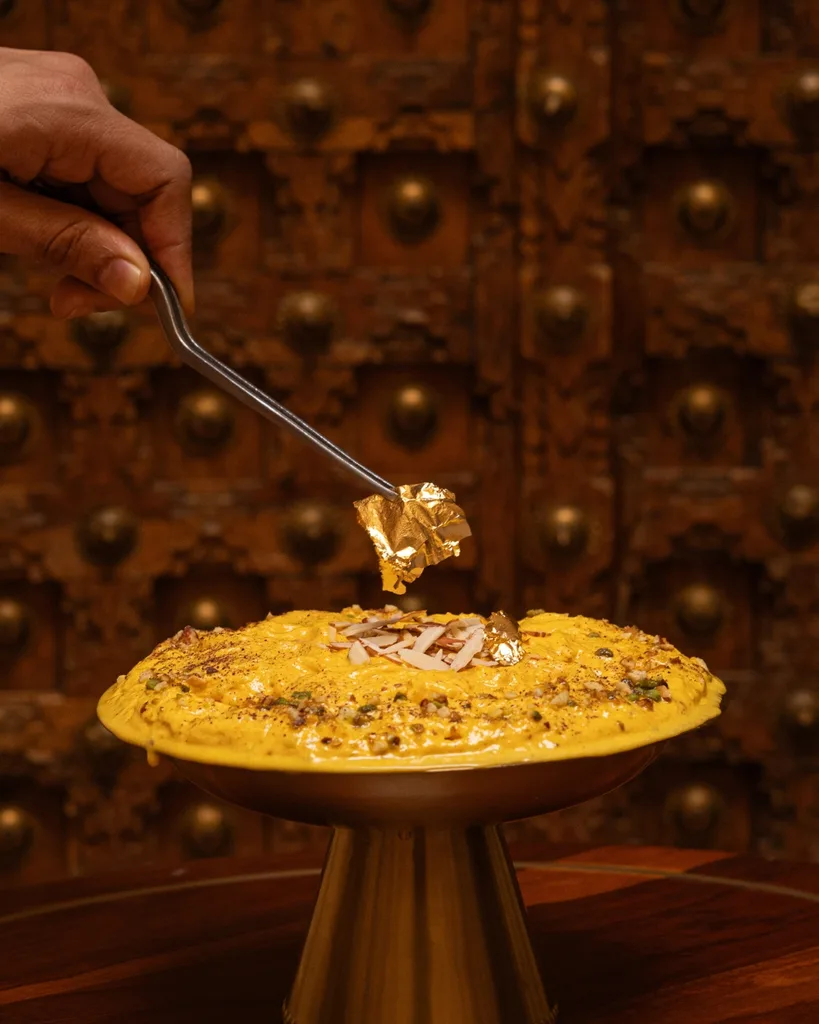
The restaurant serves a completely vegetarian menu, every dish looking like a thousand tiny treasures assembled on pastel ceramics. A chaat of yoghurt, crisp sev noodles, ruby-red pickled onion and beetroot crisps are scattered with one of the region’s most precious ingredients: the tiny “size zero” Rajasthani peas, perhaps even sweeter than the famous Spanish teardrop pea, that gleam like miniature droplets of jade. The Piquant cocktail, a blend of Mathania chilli-infused Patron, tamarind and jaggery, arrives accompanied by a jewelled camel figurine, while a saffron and almond milk cake glistens with gold leaf.
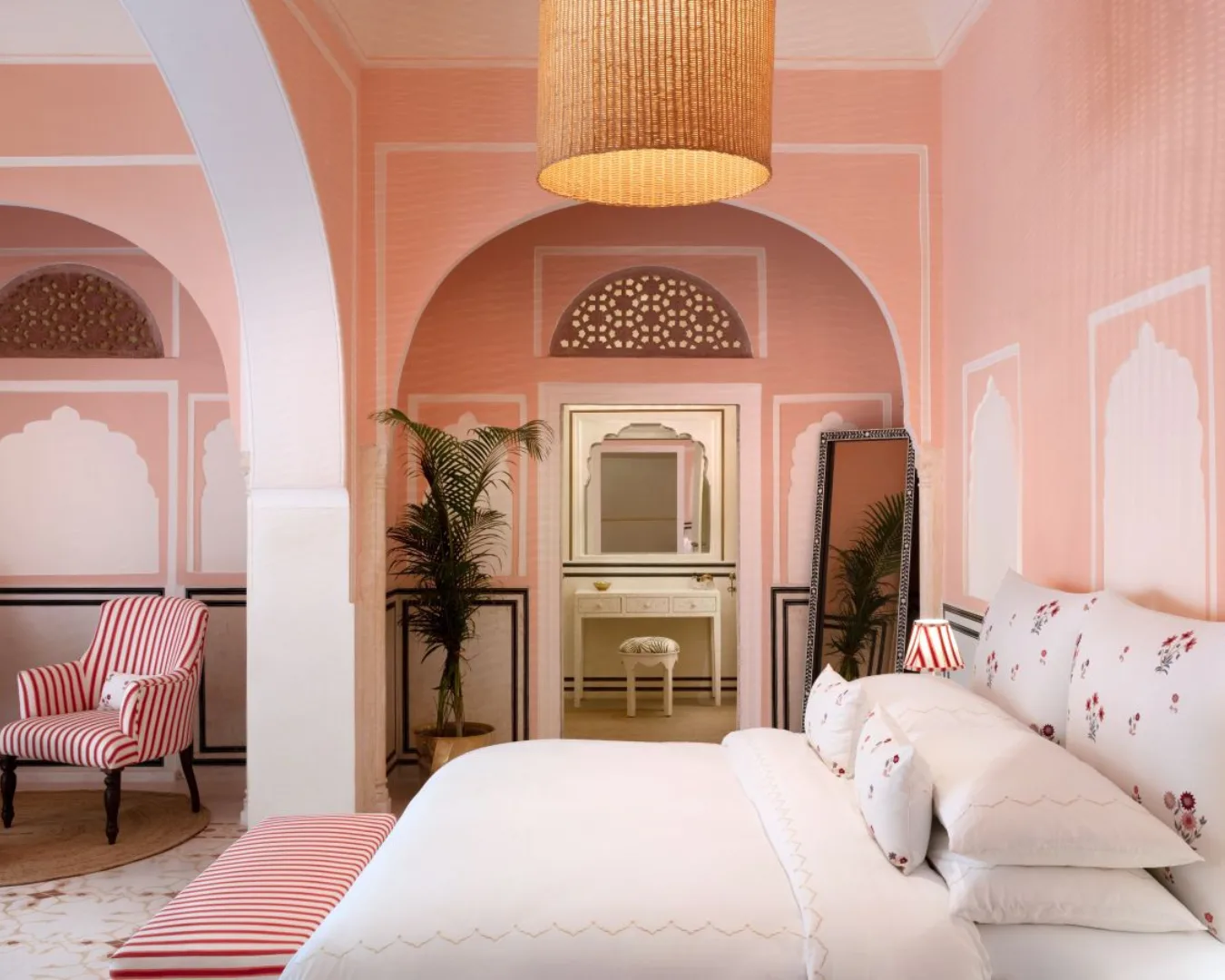
Afterwards, I’m led to my suite. Before arriving, I was asked to name my favourite colour – green – and so I am booked into the Panna Suite, washed in shades of pale coriander, a reference to emeralds. Other suites echo the colours of sapphires, pearls and rubies and there are plans in the works to open three new suites on a separate floor (their gemstone influences are still in negotiation; but I hear golden topaz is high on the list for one of them). After a shower I pat myself dry with a cotton towel no thicker than a napkin (much better for the body, ayurvedically speaking, than a fluffy towel) and collapse into soft linen sheets.
The next morning I’m met by my guide, Madhev, to explore Jaipur’s riotously colourful flower market. Every day, vendors spill white sacks of chrysanthemums, rosebuds and lotus blossoms onto the ground, hoping theirs will appear plumper and more tempting than the same offering a few feet away. Fifty tonnes change hands daily, destined for temples, weddings and people’s homes. I buy a strand of sweet jasmine to weave into my hair.
Afterwards, we join the queues for one of Jaipur’s most famous breakfasts: creamy pats of makkhan, white butter, and kesar pista makkhan, yellow butter scattered with freckles of cardamom and crushed pistachios. The butter smudges are served on edible “plates” made from shards of dried leaves from the 75-year-old Gulab Chand Dairy. Lord Krishna himself, I’m told, was a huge butter fan, and tales of his early childhood often involve the great deity stealing butter from cowherds. We chase the butter with cups of sweet chai and squiggly amber curls of sugared jalebi, deep-fried dough spirals soaked in syrup. (“If someone is complicated, we say they are ‘straight like jalebi’,” Madhev tells me with a grin.) Butter, sugar and milk for breakfast; Jaipur isn’t shy when it comes to getting the day started with a good whack of calories.
Later, we head to one of the city’s oldest jewellery workshops and stores, Gem Palace, to learn more about the Rajasthan capital’s relationship with jewels. The Kasliwal family has owned it for nine generations, draping the likes of Jacqueline Kennedy Onassis, Queen Camilla and Oprah Winfrey in lustrous gems. The late women’s rights activist, style icon and Rajasthani queen, Maharani Gayatri Devi, would regularly sit in the store drinking coffee and selecting armfuls of Basra pearls and diamonds. One of the store’s owners, Samir Kasliwal, tells a story from the Maharani’s later years: “I once asked, ‘Your royal highness, would you like to come through the back door where there are no stairs?’” he recalls. Her response was immediate: “A queen only enters through the front door!”
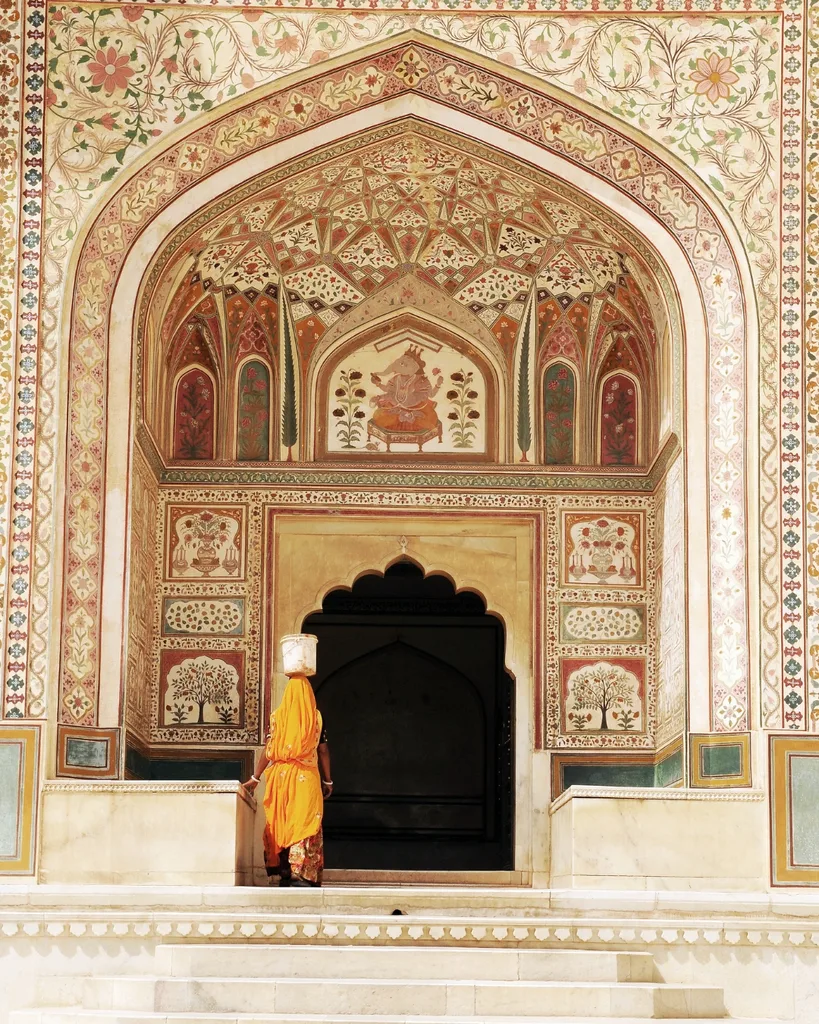
I, too, feel like a queen as Kasliwal allows me to hold an enormous, handcrafted wedding necklace, designed by his late father, Sanjay. Its six layers of raw Polki diamonds look like raindrops, set into 22-carat gold. It took over a year to make. “Each element has this wonderful feeling on the back, doesn’t it?” Kasliwal suggests, and I run my hand over delicate, textured filigree. “The inspiration comes from the architecture of Rajasthan. They call it Jali, you see it in the windows of the Amber Fort, ornamental screens surrounded by marble engraving.” As ever, jewellery and the soul of Jaipur are never far apart.
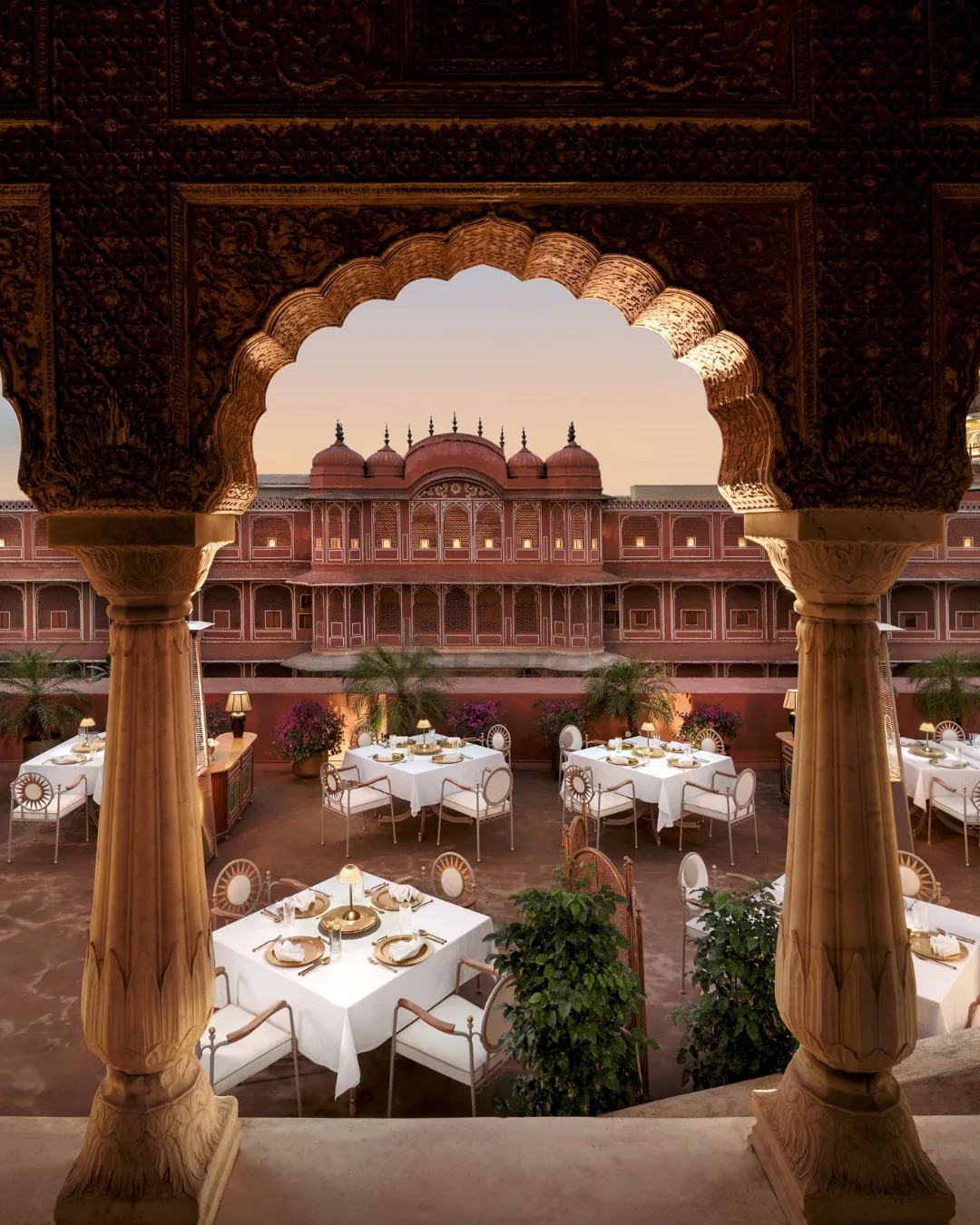
That night, the city’s cuisine combines with opulence once more over dinner at The Johri’s sister restaurant, The Sarvato, which may be the only place in the world where you can enjoy a tasting menu inside a proper working palace, in this case the 300-year-old City Palace. From my white-clothed table on the restaurant’s outdoor rooftop I can gaze directly at the personal residence of the dashing polo-playing Maharaja Padmanabh Singh. The windows from his private quarters glow a deep sapphire blue as we eat hand-pulled duck on saffron bread, and goat curry with poppyseed gravy, scattered with glassy pomegranate seeds.
At the end, a tray of petits fours is presented. One, made from sweetened goat milk, is topped with silver leaf which glimmers beneath the matching moonlight. In Jaipur, food and finery are virtually one and the same.

Related stories
Native ad body.
Native ad body.

Why Malta should be your next Mediterranean escape
Native ad body.
Discover Australia’s first UNESCO Region of Gastronomy


Share this post