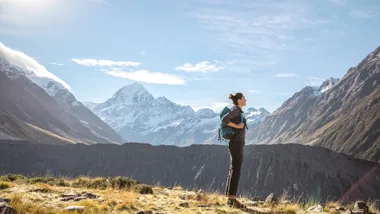


Of all the beautiful unknowns of our world, the night sky remains one of the biggest mysteries. It has inspired poetry and mythology. Explorers have used it to guide their way home. Nations continue to vie to be the first to navigate its outer reaches.
For a few years, travel trend forecasters focused on a handful of billionaires attempting to make space flight an option for regular humans. It turns out trends don’t need to be so extreme. One estimate suggests dark sky tourism will be worth US$400 million globally by 2030, representing a 10 per cent growth each year. Closer to home, 89 per cent of visitors to Western Australia showed an interest in travelling to stargaze.
Ground zero for dark sky tourism is Tucson, Arizona. In 1972, it was the first city to adopt widespread ordinances to minimise light pollution. Two years ago, Saguaro National Park, a half-hour outside Tucson, was recognised as an Urban Night Sky Place by DarkSky International. “If you want to look up into the night sky and experience the southern Milky Way with a backdrop of mountains and saguaros – the giant cactuses – it’s great,” says Peter McMahon, visitor centre operations manager at Kitt Peak National Observatory.
“It’s amazing to look down on the lights of Tucson, then look up at the Milky Way,” McMahon continues of Kitt Peak’s offerings, where guests have access to research-quality telescopes. “A lot of times, their reaction is quieter than you would think. It’s stunned silence or a deep sense of reverence.”
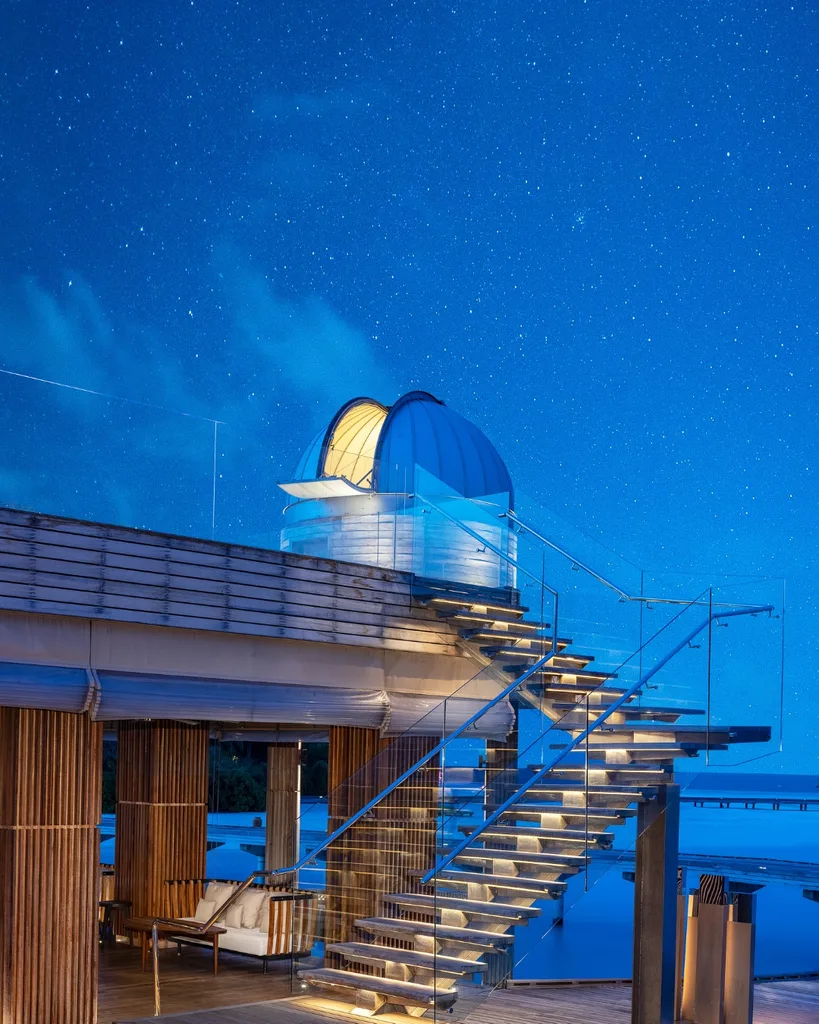
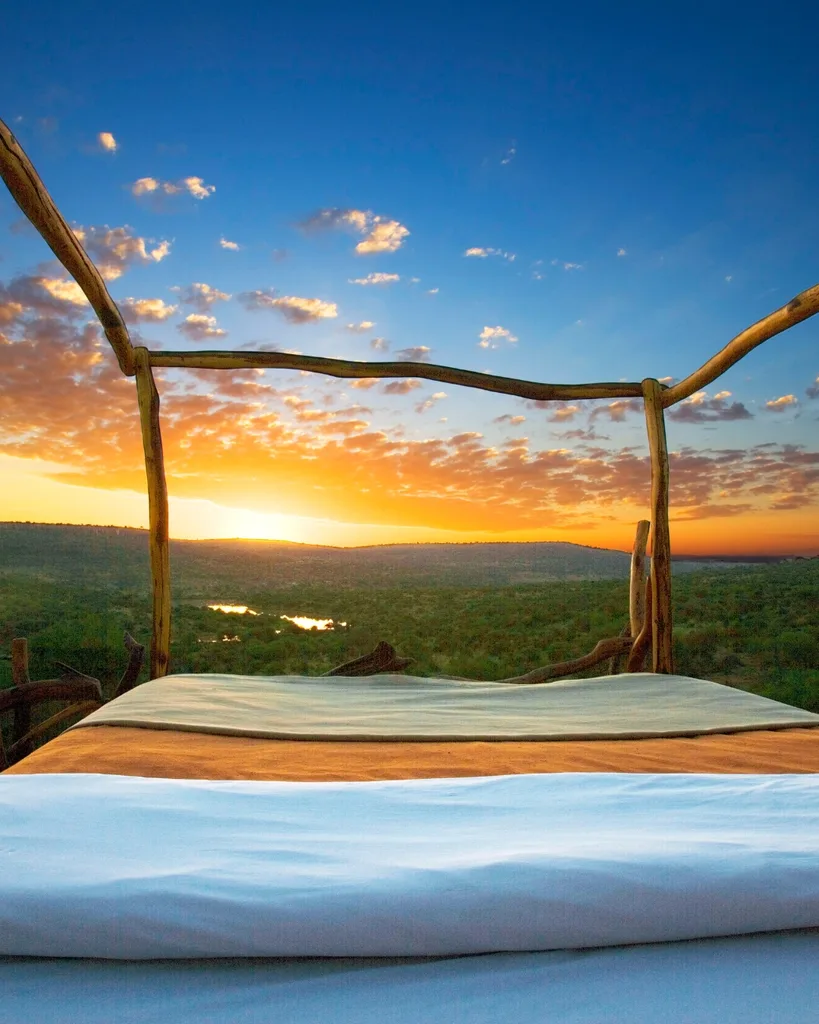
Other destinations, from Chile to Abu Dhabi and New Zealand, are now catching on to what Tucson has known for years: the sky’s the limit when it comes to astrotourism. In Kenya, you can sleep beneath the stars perched atop a rocky kopje at Elewana Loisaba Star Beds. Local astronomers and high-powered telescopes help guests at Iceland’s Hotel Rangá see constellations and the northern lights. After dinner at Anantara Kihavah Maldives Villas, guests adjourn to SKY, the overwater observatory and cocktail bar, where Ali Arushal, a Baa Atoll local, points out meteors, planets and his favourite star, Antares.
You don’t need your passport, though, to experience the overwhelm of standing beneath a blanket of stars. In Western Australia, Carol Redford has been raising awareness of the potential of dark sky tourism in small towns across the state. “In the lead-up to the 2023 eclipse we were talking in our astronomy community about how we needed astronomy-friendly towns,” says Redford, who previously ran an observatory near Perth. “I went out to the regions and said to them, ‘Do you realise you have a world-class asset above your heads every night? People would pay money to have an experience like this.”
Now there are astrotourism towns, astrophotography hotspots and specially chosen observation sites from the aptly named Darkan in the Wheatbelt region to Shark Bay, 900 kilometres north of Perth. Some have platforms with outdoor furniture; others have planispheres to help visitors locate constellations. There are even stargazing trails, with itineraries from two days to 10 days, on Redford’s Astrotourism WA website.
Western Australia’s remoteness – 80 per cent of the state’s residents live in Perth – offers remarkable night-sky tourism opportunities, but the skies are big and dark elsewhere, too. Each Luxury Lodges of Australia property has a stargazing experience, from Constellations by Campfire at Spicers Peak Lodge to Dining under the Stars on Orpheus Island.
“My approach with the luxury lodges has always been, ‘Well, you don’t need to wait to 2029 to see an asteroid fly past,’” says the company’s executive chair Penny Rafferty. “Every night in these places, the sky is phenomenal.”
Some lodges now include an Indigenous element in their stargazing programs. Pretty Beach House, north of Sydney, collaborates with Girra Girra Aboriginal Experiences for its Dark Sky Storytelling Tour, while cultural stories are shared at Longitude 131°’s outdoor dining experience.
“We talk about luxury being rarity of access, not just to place but also to the knowledge that goes with it,” Rafferty continues. “This is learning in a beautiful way, along with access to these incredible locations that offer a bird’s-eye view of the night sky.”She remembers a night at Bullo River Station in the Northern Territory, where staff member Ben Cook pointed out the Southern Cross. “The sky was just this carpet of velvet,” she says, “and there was the feeling you could reach up and almost touch the stars.” Redford recalls her own feeling of wonder, experienced one night near the town of Perenjori. “It was the first time I’d been by myself in the middle of nowhere,” she says. “There was a crescent moon, so I could see the trees and the colour of the rocks. It was, I don’t want to say spiritual, but I felt a deep connection to that country. And it was breathtaking. There are not many places where you can stand in the dark, in the silence, with that ancient landscape around you and the Milky Way above. It’s very powerful – awe-inspiring, really.”

Related stories
Native ad body.
Native ad body.

Native ad body.
Why Malta should be your next Mediterranean escape