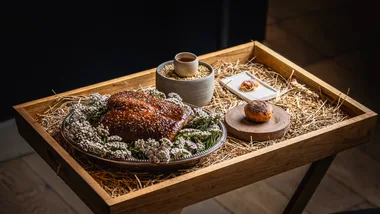


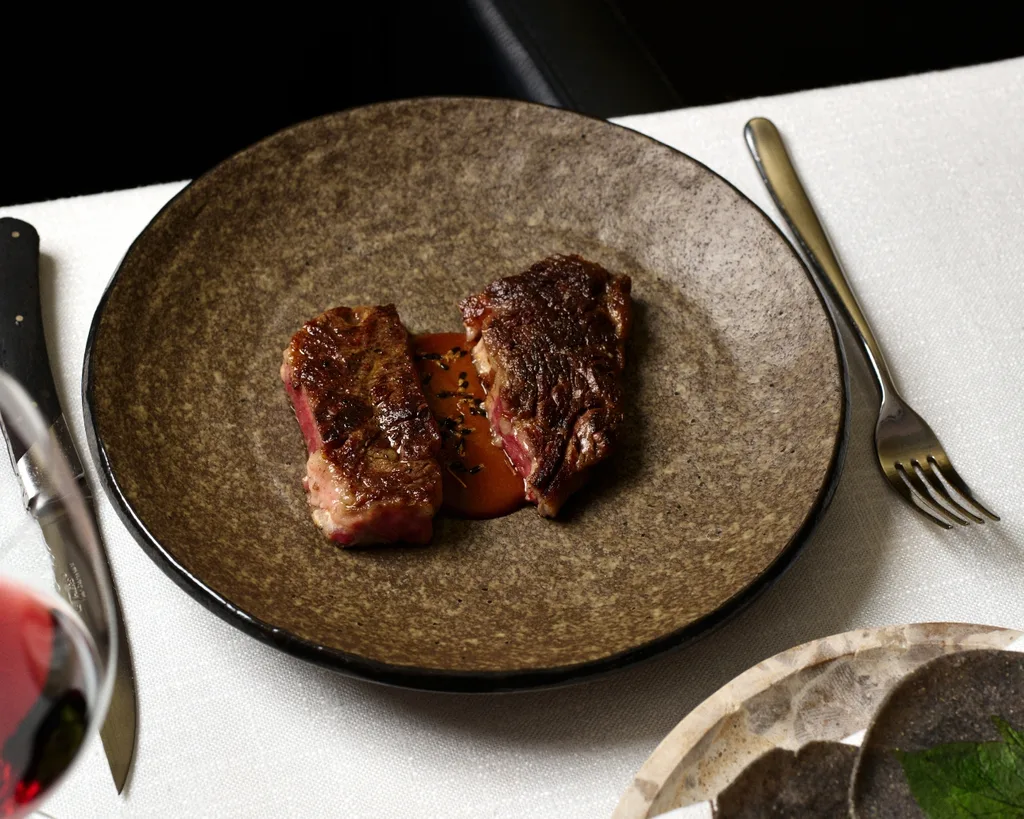
The fourth course of Rockpool Bar & Grill’s five-course beef tasting menu is, to me, the winner. It’s a heart-shaped wedge of full-blood David Blackmore MB9+ wagyu rump cap, seared to blushing perfection and served with a selection of South American-style accompaniments – a fried arepa, beans, piquant aji and hogao sauces – that reflect executive chef Santiago Aristizabal’s Colombian heritage. It’s actually the sixth way I’ve been served cow during this meal – the first course began with two different snacks made of Blackmore’s famous Mishima beef, and course four included a duo of scotch fillet and spinalis from Tasmania’s Cape Grim. Yet somehow I’m not all meated out. These days I, along with what feels like most of the country, can’t get enough of good, old-fashioned meat.
Meat truly is having a moment. According to Meat & Livestock Australia’s 2025 Community Sentiment Research report, 24 per cent of Australians report eating more red meat than 12 months ago. Twenty-two per cent also say they are eating less, but this marks the first time in the survey’s 15-year history that the “increasers” have outnumbered the “reducers”. The Australian Bureau of statistics data backs this up: its newest data says that Australians increased their meat consumption in 2023-2024 by 2.3 per cent over the previous year. We remain the world’s leaders – by a long shot – of both sheep and cow meat consumption.
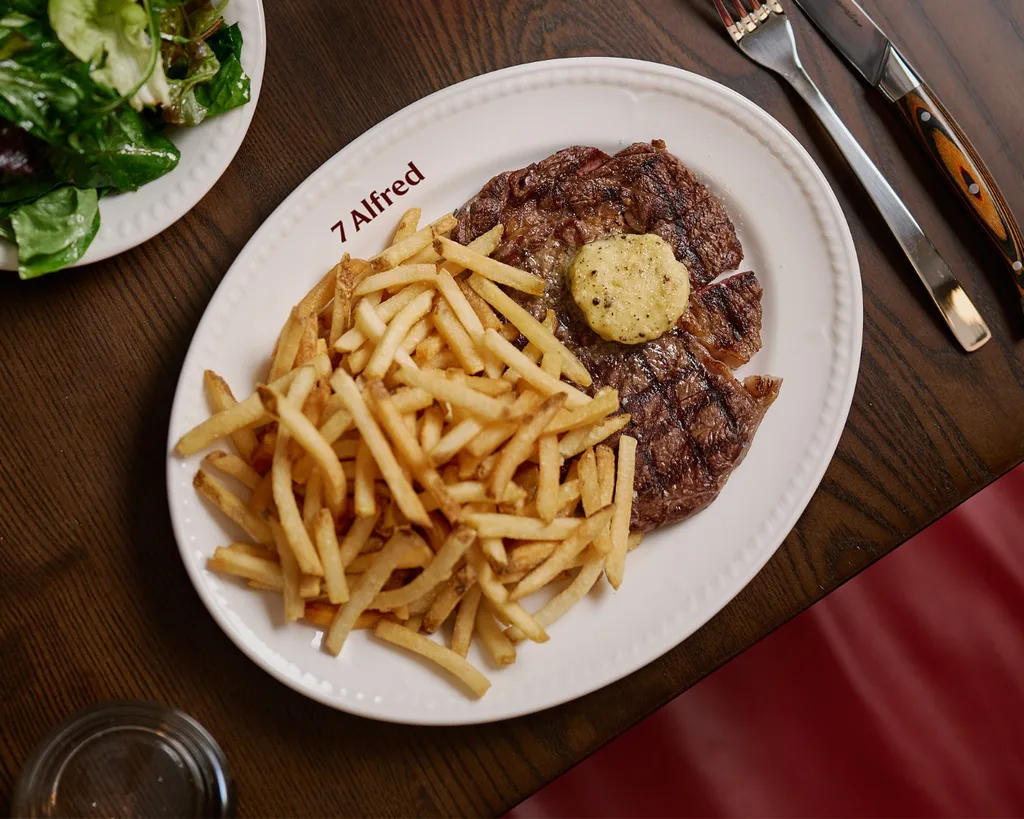
Restaurants are noticing the trend as well. Neil Perry famously said in a recent interview that at his flagship restaurant Margaret, which sits at number two on the increasingly influential World’s 101 Best Steak Restaurants list, “We can’t make a steak expensive enough for people to stop buying it.” Aristizabal says Rockpool customers are excited to try lesser-known cuts and styles of beef such as Denver and skirt, and its parent group, Hunter St. Hospitality, is so meat-invested that they’ve opened venues plating up nothing else: 24 York in Sydney and 7 Alfred in Melbourne. “We serve just one main dish: steak frites. No chicken, no fish, no vegetarian option. And we’re averaging 3000 steaks a week,” he says. “I think that says a lot about how willing people are to lean into meat when it’s done well.”
Perhaps surprisingly, health seems to be a big factor. MLA’s research says a whopping 87 per cent of those increasing their red meat intake cited an interest in upping their iron and protein levels, as well as improving their health overall, as their primary motivators. “Protein” has undoubtedly become one of the most popular words in the health and fitness world: TikTok groans with content creators devising high-protein dupes for their favourite meals, and experts and influencers all highlight the macronutrient as playing a crucial role for women looking to maintain health and wellbeing during menopause.
On the flipside, it’s not a great time to be a vegetarian. In February 2025, plant-based Newtown restaurant Flora opened to great fanfare, with a menu that “celebrates inventive vegetarian cuisine”. Barely five months later, it announced it would “evolve” to serve meat as well, but just two months after that it shut up shop altogether. In New York, the menu at Eleven Madison Park famously went entirely vegan in 2021. Last year, chef Daniel Humm declared the restaurant would once again “embrace choice” and put duck, fish and red meat back onto plates.
What hasn’t changed, however, are the very real negative environmental and animal welfare challenges of mass meat farming. Australian startup Vow made a plucky effort to address the issue with the launch of a “cultured quail” they call “Forged”. A rather startling pale pink substance that can be fashioned into something that looks like foie gras, it’s made from real quail cells, ostensibly removing the need to farm whole animals. Several restaurants including Sydney’s Maiz, Lana and The Waratah have served Forged, though it’s not clear whether anyone is truly clamouring for a manufactured alternative to fresh quail meat. Perhaps tellingly, many of the restaurants serving it are using it in dishes that also include “real” meat like beef or duck. Elsewhere, “fake meat” companies like Beyond Burger and Impossible Foods have recorded slumps in sales.
Recently though, there’s been a big win for small-scale livestock farmers, as well as the consumers who want to eat the commonly ethically grown meat they produce. In late 2025, Victoria was the first state in Australia to pass groundbreaking reform that allows small- and medium-sized farmers – who tend to have high standards of animal welfare and landcare practices – to erect micro-abattoirs on their own properties without a planning permit. It’s a massive win over multinationals and exporters, who have been increasingly monopolising the large abattoirs and effectively shutting them off to smaller livestock producers. “If we hadn’t won this reform we wouldn’t have small-scale farmers left in Victoria,” says Dr Tammi Jonas, a farmer and agrarian activist. “I’m confident that within the next year or two the other states will follow suit.”
However we farm, serve and eat it, meat is making an epic comeback on plates all over Australia. “We have access to some of the best beef in the world, and people genuinely value it,” says Rockpool’s Aristizabal. “With the quality we’ve got here it’s hard to see that changing.”

Related stories

Native ad body.
Native ad body.

Native ad body.